Exploring NAD+: Is It Really A Key To Longevity?
Authored by Jennifer Sweenie via The Epoch Times (emphasis ours),
Short for nicotinamide adenine dinucleotide, NAD+ supplements are being studied for their effects on cellular energy production, mitochondria function, and DNA repair.Before reaching for a supplement, though, it’s important to explore the role of NAD+ in the body and the existing evidence on its ties to longevity, as well as ways to boost NAD+ levels naturally.
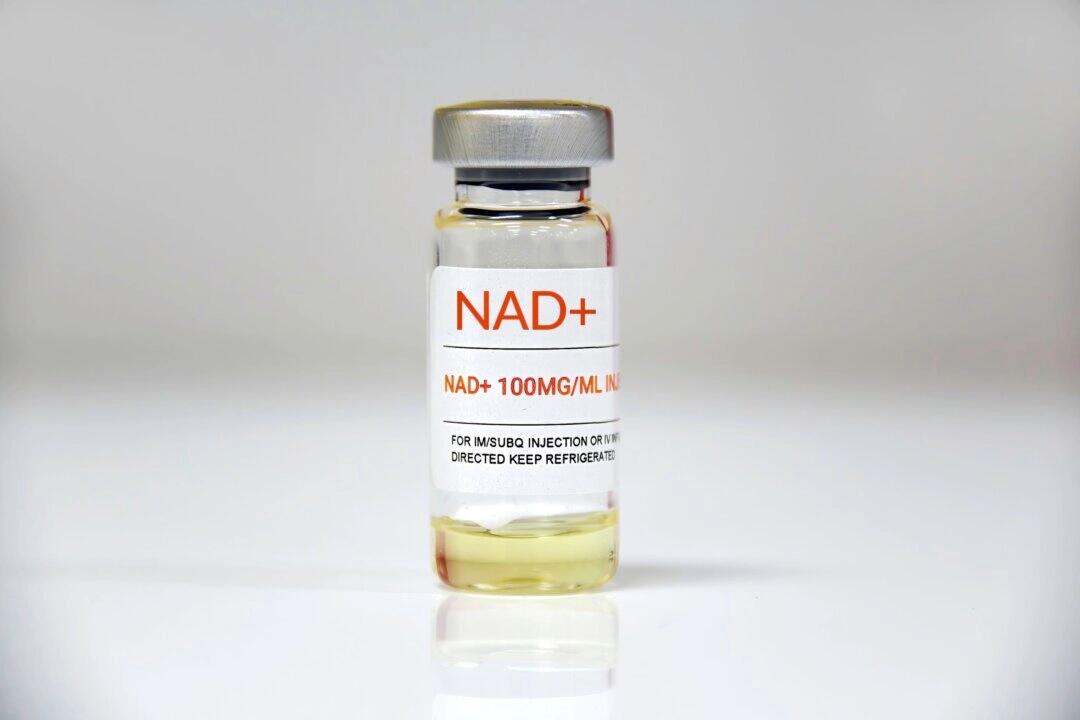
As researchers work to uncover the mechanisms behind aging, NAD+ has emerged as a promising therapeutic.
What Is NAD+?
NAD+ is a coenzyme, a small molecule that acts as a catalyst for enzymes to perform their functions. NAD+ is found in all cells in the body and has a critical role in transferring energy within our cells.
NAD+ is involved in various metabolic processes, including converting the food we eat into the energy our cells need to stay alive. It helps generate adenosine triphosphate (ATP), a final product our bodies can use. ATP is the end fuel source all our cells use. Without NAD, you cannot make ATP—an essential part of life.
NAD vs. NAD+
NAD+ is the functional form of NAD in the body. Although these terms are sometimes used interchangeably, they are not the same molecule.
“NAD+ is the one we are primarily focused on when it comes to longevity, cellular health, and energy,” Dr. Orel Swenson, founder of Aeonic Health, a regenerative and longevity medicine practice based in Boston, told The Epoch Times in an email.
As observed in mouse models, NAD+ levels naturally drop as we age. By the time we reach middle age, our NAD+ levels are at half of what they were in our youth.
“NAD+ levels decline naturally with age partly because the accumulation of DNA damage and loss of mitochondrial efficiency demand more and more NAD+,” said Swenson.
NAD Supplementation
A few existing methods to restore NAD+ levels include oral supplements, nasal sprays, transdermal patches, self-injections, and fusion therapy. The main differences lie in the delivery. Some methods are considered faster and more effective than others.
NAD+ itself isn’t really a supplement that can be effectively taken by mouth. The bioavailability is quite limited this way,” said Swenson.
For this reason, other methods of administering NAD+, such as via IV infusion or subcutaneous injections, are growing in popularity.
“Unsurprisingly, when taking an oral supplement, the increase in your NAD+ levels is more gradual.Infusions and injections are much quicker but are more expensive and require clinician oversight for safety,” he said.
“When given this way, it’s imperative to work with a healthcare professional familiar with NAD+ administration, as it can cause nausea, headaches, fatigue, and even low blood pressure if given incorrectly,” he continued.
NAD+ Precursors
Precursors are molecules that are converted into another substance or compound by a chemical reaction. NMN (nicotinamide mononucleotide) and NR (nicotinamide riboside) are substances the body can use to produce NAD+. While NAD+ is more challenging for the body to absorb, these precursors are more easily converted into NAD+.
“NMN needs fewer steps (i.e., it is closer to becoming NAD+) than NR, but both are available as oral supplements with good bioavailability,” explained Swenson.
A study published in GeroScience in 2023 determined that NMN supplementation increases blood concentrations of NAD+ and is safe and well tolerated in oral doses of up to 900 mg per day.
NR, a new form of vitamin B3, is also recognized as safe and effective in raising NAD+ levels at a cellular level. NR oral supplements are often found at a lower price point than NMN varieties.
![Age-Associated Changes In Oxidative Stress and NAD+ Metabolism In Human Tissue – Scientific Figure on ResearchGate. Available from: https://www.researchgate.net/figure/Correlation-between-NAD-levels-and-Age-in-A-Males-B-Females-A-NAD-concentrations_fig8_230590378. CC by 4.0 [accessed 4 Oct 2024]](https://cms.zerohedge.com/s3/files/inline-images/image%28480%29_0.jpg?itok=A2y84ygs)
Swenson explained the role of NAD+ in terms of longevity in four points. As a coenzyme, it interacts with other enzymes in the body to facilitate:
ATP production:NAD+ acts as a coenzyme, interacting with other enzymes in the body to produce ATP, the final energy source for cells.
Mitochondrial health:Mitochondria can be likened to a refinery or power station where ATP production takes place. NAD+ is essential for maintaining optimal mitochondrial function and for mitochondrial biogenesis, which involves the creation of new mitochondria.
DNA repair:Sirtuins are signaling proteins that have a critical role in the aging process, including energy metabolism, inflammation, and extending lifespan. By interacting with sirtuins, NAD+ mediates the repair of damaged DNA, which accumulates as people age.
Reduction of inflammation:NAD+ plays a role in reducing inflammation. As we age and levels decline, we may experience an accumulation of inflammation, known as “inflammaging.”
A review published in The International Journal of Molecular Science concluded that the existing research on the benefits of NAD+ on aging and healthspan is currently based on cell cultures and model organisms, and research on humans is warranted. Further research is also needed on long-term effects and dosage.
Swenson concluded, “It [NAD+] does not represent a magic bullet, but rather should be viewed as part of an overall strategy for maximizing healthy aging.”
Gauging NAD+ Levels
There may be too much of a good thing, as high NAD+ levels have been linked to cancer and impact immunity. Existing evidence on the exact mechanisms of the connection is limited. However, NAD+ levels seem to have both pro- and anti-cancer effects. It may serve as a protective factor early on in cancer development but as a promoting factor later in the progression of the disease.
A study published in Nutrients found that “Replenishing NAD pools by NR could inhibit tumor growth and cancer metastasis as well as promote the overall health status of tumor-bearing mice.”
Specifically, the authors suggested that boosting NAD by NR supplementation could be a novel strategy to prevent the progression of hepatocellular carcinoma.
Read the rest here…
Tyler Durden
Mon, 10/21/2024 – 02:45